Good housekeeping practices can significantly reduce the risk of accidents and exposure to hazardous materials. Spills and accidents are more likely to occur in cluttered work spaces. Follow the good laboratory housekeeping tips below.
General
- Organize bench tops with large equipment in the back and progressively smaller equipment toward the front (Figure 1). Leave sufficient space to perform your work safely and to avoid reaching over items that can easily get knocked over, such as graduated cylinders or flasks (Figure 2). Keep all containers and glassware at least 2 inches away from the front of the lab bench.
- Put away any clean glassware that is not being used. Avoid accumulating large amounts of dirty dishes on lab benches and by sinks. Clean them when your experiment is done. Never leave glassware in the sink because it can easily break.
- Regularly check glassware for star cracks, chips, or cracks, and promptly discard or repair any unsafe glassware.
- Discard disposable pipets and pipette tips immediately after use.
- Properly secure and label all containers of chemicals/experimental intermediates.
- Keep drawers and cabinets closed when not in use.
- Promptly clean up spilled chemicals, silica gel, and any other powdered materials to eliminate respiratory hazards
- Remove any equipment or clutter that interferes with access to emergency equipment such as eyewash stations, safety showers, and fire extinguishers.
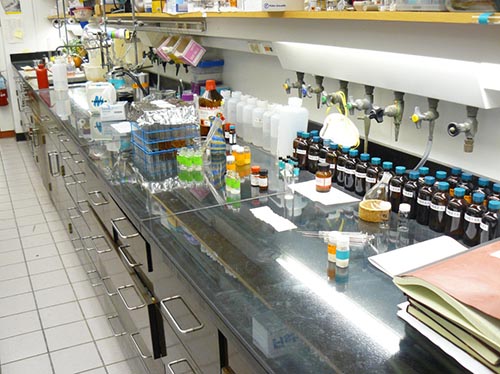
Figure 1: Well organized and uncluttered lab bench (notice the space 6-12" from the ledge and less used items placed in back away from the ledge).
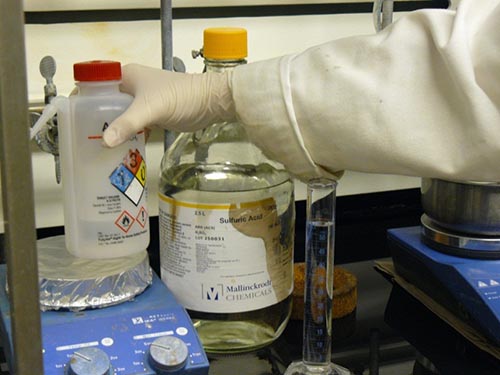
Figure 2: A cluttered work bench makes work prone to spills, as items are easily knocked over.
Aisles
Aisles are the passageways to safety in the event of a fire or chemical release. They should be easy to navigate even when visibility is poor (e.g., smoke is in the laboratory). Obstructing aisles and passageways is not only a fire code violation but can also cause slips, trips, falls, and other accidents. OSHA regulations require that the exit is at least 28 inches wide at all points (29 CFR 1910.36).
- Keep aisles easily accessible, neat, and free of objects that may pose an obstacle during an evacuation. Keep stools, waste solvent jerricans, and other objects near the sides of aisles or underneath the bench.
- To prevent slips, trips, and falls, immediately clean up any spilled water, oil (leaking vacuum pumps), or ice on floor surfaces. Fix any protrusions from the floor, such as damaged tiles.
- Clean up any broken glassware (e.g., broken tubes), sharps, and pipette tips on floors. Such items pose a serious tripping hazard, and they can cause cuts and punctures to people kneeling on the floor.
Chemical Fume Hoods
Good housekeeping is particularly important in chemical fume hoods, as a cluttered hood does not function properly and does not provide protection from hazardous vapors. Read the DRS Laboratory safety guide/Chemical Hygiene Plan on proper fume hood use for more information.
References
NRC (National Research Council). Prudent Practices in the Laboratory. Handling and Management of Chemical Hazards. National Academy Press: Washington, DC, 2011.
Furniss, B. S.; Hannaford, A. J.; Smith, P. W. G.; Tatchell, A. R. Vogel’s Textbook of Practical Organic Chemistry, 5th Ed.; Longman Group UK Limited: Singapore, 1989.